
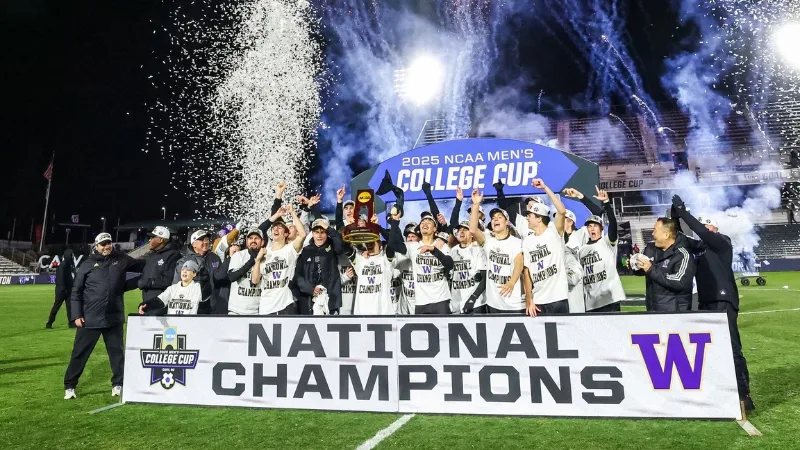



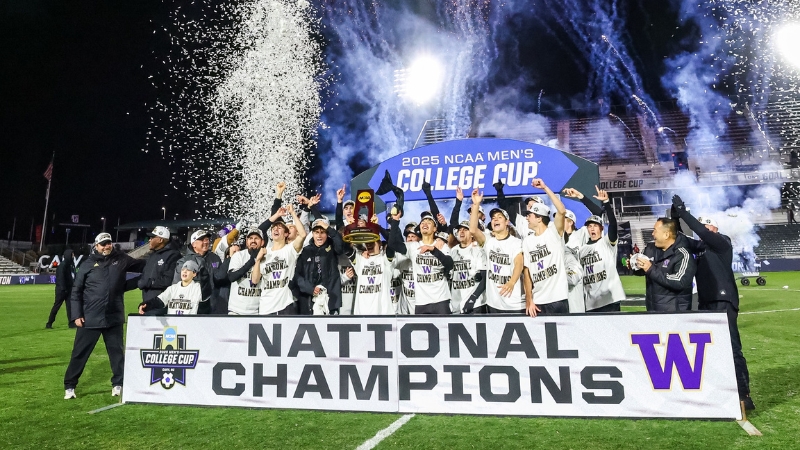
Division I men’s college soccer has evolved through different eras, and the latest, beginning in the 2010s, has undoubtedly been shaped by the rise in international athletes, from 18% of the player pool in 2010 to 35% by 2025. Furthermore, from 2020 to 2024, all five national titles were won by programs whose rosters were 21-42% international, in contrast to the prior 13 seasons, when each champion boasted a squad that was at least 80% domestic. Then, on December 15, 2025, Washington lifted the trophy, and not only did its entirely domestic roster counter that trend, but it did so in a way not seen for decades: a trophy born from players developed within the state.
In the final triumph over NC State, seven of the eleven in the starting line-up hailed from Washington. The 20 in-state players on the 29-man roster set 21st-century records for an NCAA DI champion both in percentage and count. The previous closest was the 2001 North Carolina team, with 14 of 25 from the state.
Upon inspection, nothing about the Evergreen State seems likely to produce such an anomaly. After all, Washington is the 18th-most populous state in the U.S., and studies reveal that soccer is its third-most popular sport. To understand how the Huskies laid the foundations for that historic triumph, it is necessary to look back in time: rewind two decades and travel south, when head coach Jamie Clark was a relatively new assistant at a now-defunct program.
“My first assistant coaching job was at the University of New Mexico for Jeremy Fishbein. There was a really good group of guys that went to the national final and lost in the [2005] College Cup. That was almost all local kids who stayed with the program and got better . . . So I’ve seen it, I watched it. I’d seen local pride and getting to know your local guys. So I give a lot of credit to being part of Jeremy’s staff.”